

The Future of Vehicle Identification
4D gel number plates are changing how we see car ID. These top plates mix use with style. They turn a must-have into a look that stands out. As cars get better, so do their ID parts.
The car world now loves 4D gel tech. It makes cars look good while still following the law. This guide tells you all about these new plates. We cover how they’re made, the laws, and how to care for them.
If you love cars or just want to know about new trends, this guide helps. You’ll learn about 4d gel number plates and why so many car fans in the UK want them.
What Are 4D Gel Number Plates?
Definition and Construction
4D gel number plates are top car ID parts with raised 3D letters. Unlike flat plates, these use new ways to make depth. The “4D” name means the 3D look comes from:
- Laser-cut acrylic letters (4-5mm thick)
- Top gel resin coat
- Careful way to put them on
- UV light to make them hard
Manufacturing Process
Making 4d gel number plates has steps:
- Cut good acrylic sheet to size
- Use laser to cut each letter
- Put letters on the plate base
- Add clear gel resin coat
- Use UV light to harden
- Check for quality and rules
Key Components
- Base Material: Shiny acrylic sheet that meets rules
- Letters: Raised acrylic parts that make 3D look
- Gel Coat: Safe resin layer that makes it last and look good
- Glue Layer: Sticks plate to car well
Legal Status and Compliance
Legal Framework
4d gel number plates are legal in the UK if made right by DVLA rules. The law comes from the Road Vehicles (Display of Registration Marks) Rules 2001.
Compliance Requirements
For 4d gel number plates to be legal, they must:
- Have letters 79mm tall and 50mm wide
- Space letters 11mm apart
- Use black letters on white (front) or yellow (back)
- Be made of stuff that shines
- Show BS AU 145e mark
- Show seller’s name and where they are
Official Guidelines
The UK government rules say plates must be easy to read. The raised parts on 4D plates must not be more than 4mm high.
Non-Compliant Features
Some things make 4d gel number plates not legal:
- Letters that are not black
- Fancy fonts or changed letters
- Backgrounds with patterns
- Missing or wrong British Standard mark
Registered Suppliers
Only Registered Number Plate Sellers (RNPS) can make and sell 4d gel number plates. They must check who you are and that you own the car.
Key Benefits
Enhanced Visual Appeal
The raised letters make a 3D look that makes your car stand out. This top look turns a plain plate into a style item.
Superior Durability
4d gel number plates last much longer than old types:
- Gel coat stops fading from sun
- Acrylic letters won’t crack or peel
- Made to work in all weather
- Surface won’t hold dirt
Improved Legibility
Even with 3D look, these plates are easy to read:
- Raised letters make dark spots that help you see
- Clear letters help you know what they say
- Look good in all light
- Help cameras read the plate
Customization Options
4d gel number plates can be made just for you:
- Letter thickness: 3mm, 4mm, or 5mm
- Gel types: plain, tinted, or neon
- Border styles that follow rules
- Badges and flags when allowed
Increased Vehicle Value
Good plates can make your car seem worth more:
- Shows you take care of your car
- Makes car look better to buyers
- Stays looking good for years
- Adds to how nice your car looks
3D vs 4D Gel Plates: Key Differences
Character Thickness
The main change between 3D and 4D plates is how thick the letters are:
- 3D Plates: 3mm thick letters
- 4D Plates: 4-5mm thick letters
This makes 4D plates have a deeper 3D look.
Visual Impact
- 3D Plates: Small raised look, not too bold
- 4D Plates: Big 3D look, very clear
The thicker letters on 4D plates make more dark spots and light play.
Manufacturing Process
- 3D Plates: Made with resin put on letters
- 4D Plates: Made with laser-cut acrylic and gel coat
4D plates last longer because of how they’re made.
Legal Considerations
Both plate types are legal if they follow DVLA rules. But 4D plates need more care to make sure the letters aren’t too high.
Price Comparison
- 3D Plates: Cost less
- 4D Plates: Cost more but are worth it
You pay more for 4D plates but they look better and last longer.
Types of 4D Gel Number Plates
Standard 4D Gel Plates
These have black raised letters on right color backs. They give the 4D look but still seem normal.
4D 5mm Gel Plates
These have very thick 5mm letters for the biggest 3D look. They make strong dark spots and look very bold.
4D Neon Gel Plates
These letters have a neon-like shine that catches light in a special way. They come in colors but still have black letters to follow rules.
4D Gel Neon Plates
Like neon plates but made in a different way. They look bright and still meet all laws.
4D Red Gel Number Plates
These have red parts but still have black letters. They add color but stay within the law.
Tinted 4D Gel Number Plates
These have a light color tint on the gel coat. They look less bold than neon but still stand out.
4D Glitter Gel Number Plates
These have small bits of glitter in the gel coat. They shine and look great at car shows.
Custom 4D Gel Number Plates
These can be made just how you want. You can pick colors and styles but still follow the law.
How to Choose the Right Plates
Vehicle Type Consideration
Different cars look good with different plates:
- Luxury Cars: Plain or 5mm plates for a rich look
- Sports Cars: Neon or bold plates for a fast look
- Classic Cars: Old-style plates that fit the car
- Daily Cars: Plain plates that make the car look better
Budget Determination
Plates cost from low to high:
- Low Cost: Plain plates
- Medium Cost: Plates with some custom parts
- High Cost: 5mm, neon, or custom plates
Good plates cost more but last much longer.
Personal Style Assessment
Pick plates that show your style:
- Simple Look: Plain or tinted plates
- Bold Look: Neon or bright plates
- Unique Look: Custom-made plates
Legal Compliance Verification
Make sure plates follow all DVLA rules:
- Right letter size and space
- Right colors
- Must have marks and seller info
- Buy only from registered sellers
Installation Requirements
Most plates fit in the same spots as old plates. Some special plates may need help to put on. Think if you can do it or need a pro.
Durability Evaluation
Think about where you drive:
- Normal Use: Plain plates work for daily driving
- Tough Use: Good plates for bad weather
- Show Use: Pretty plates for car shows
Installation and Maintenance
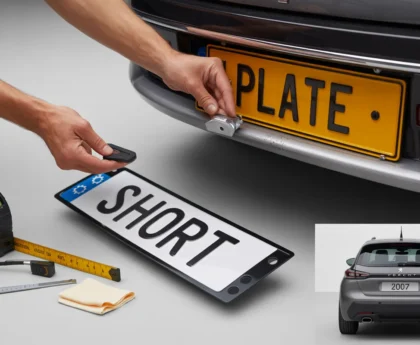
Preparation Steps
Before you put on new plates:
- Get tools: screwdriver, tape, level, soap, cloth
- Look at where the old plate was
- Take off plastic film from new plates
- Check plate size fits your car
Installation Methods
Screw Mounting:
- Put plate where it goes and mark hole spots
- Make new holes if you need to
- Line up plate with holes
- Put in screws but not too tight
- Check plate is straight and firm
Adhesive Mounting:
- Clean the spot where plate goes
- Put sticky tape on back of plate
- Put plate on right away (only one chance)
- Push hard so it sticks well
- Wait for glue to dry before you drive
Holder Mounting:
- Put holder on car with screws or glue
- Slide plate into holder
- Make sure it’s tight
Post-Installation Verification
After putting on plate:
- Make sure it won’t move
- Check it’s straight and level
- Make sure you can read the plate
- Make sure it follows all laws
Maintenance Guidelines
Cleaning:
- Wash with mild soap and soft cloth
- Don’t use strong chemicals
- Dry well so no water spots
- Be extra careful with neon and glitter plates
Inspection:
- Look for damage often
- Make sure letters are still on tight
- Check for cracks or fading
- Make sure screws are still tight
Protection:
- Put on UV spray sometimes
- Park in shade when you can
- Don’t use car washes with rough brushes
- Don’t spray water hard on the letters
Troubleshooting
Loose Letters:
- Call the seller right away
- Don’t drive until fixed
- Don’t try to fix it yourself
Fading or Color Change:
- Clean well to remove dirt
- Put on UV protection
- Ask seller if it keeps happening
Small Damage:
- Clean the spot well
- Use clear fix gel if you can
- Ask a pro for big damage
Frequently Asked Questions
Are 4D gel number plates legal?
Yes, 4d gel number plates are legal in the UK if made right. They must follow DVLA rules for size, space, color, and marks. Buy only from registered sellers.
What’s the difference between 3D and 4D plates?
4D plates have thicker letters (4-5mm vs 3mm). This makes a deeper 3D look and makes them last longer. Both are legal if made right.
How long do 4D gel plates last?
With good care, 4d gel number plates last 5-7 years or more. This is much longer than plain plates that may look bad in 2-3 years.
Can I install 4D gel plates myself?
Yes, most people can put on 4d gel number plates with basic tools. It’s like putting on any plate. But for 5mm plates, you may want a pro to help.
Are 4D gel plates worth the cost?
Yes, they look better, last longer, may help sell your car, and can be made just for you. This makes them a good buy for many car owners.
Do 4D gel plates affect MOT tests?
When made and put on right, 4d gel number plates won’t cause MOT problems. But they can fail if letters are wrong size, plate is broken, or not on tight.
Can I customize 4D gel plates?
Yes, you can pick letter thickness, gel type, border, and badges. But letters must stay black to follow the law.
How should I clean 4D gel plates?
Use mild soap and soft cloth. Don’t use strong chemicals or spray water hard on letters. Be extra careful with neon and glitter plates.
Where to Buy Quality Plates
Registered Suppliers
Only buy from Registered Number Plate Sellers (RNPS) to get:
- Plates that follow DVLA rules
- Proof that you own the car
- Good quality
- Way to track who made the plate
Supplier Evaluation Criteria
When picking a seller, look for:
- Good materials and how they make plates
- Knowledge of the laws
- Good help for customers
- Many types of plates
- Promise to fix problems
- Good reviews from other buyers
Online vs. In-Person Purchase
Online Good Points:
- Easy to order from home
- More types to pick from
- Easy to check prices
- Plates sent to your home
In-Person Good Points:
- Talk to a person
- Get plates right away
- See plates before you buy
- Help putting plates on
Recommended Supplier: Number Plate Man
Number Plate Man gives you:
- Plates that follow all DVLA rules
- Top materials and making
- Many types of plates
- Expert help and tips
- Good prices
- Happy customers
Available Products
- Plain 4D gel number plates
- 4D 5mm gel plates for more 3D look
- 4D neon gel plates for bright look
- Tinted 4D gel plates for soft look
- Other stuff like holders and screws
Purchase Process
- Pick the plate type you want
- Give your car’s number plate info
- Show papers that prove you own the car
- Say yes to how it will look
- Pay for the plates
- Get plates by mail or pick up
Pricing Considerations
- Plain 4D plates: £40-£80 for a set
- 4D 5mm plates: £60-£100 for a set
- Special plates (neon, glitter): £70-£120 for a set
- Custom plates: £100+ for a set
Price changes based on plate type, seller quality, how much you change it, and other help.
Conclusion
4D gel number plates mix use and style in car ID. These top parts look good, last long, and follow laws while letting you make them your own.
When picking 4D gel plates, think about your car type, what style you like, how much you can spend, and what the law says. Always buy from good sellers like Number Plate Man to get quality plates that follow rules.
The question “are 4d gel number plates legal” has a clear answer: yes, when made and put on right by DVLA rules. This legal plus, with their good looks and long life, makes them a great choice for car owners who want to stand out.
Want to make your car look better? Look at our plates or talk to us for help picking the best 4D gel number plates for your car.