
Why Number Plate Size Matters
Wrong number plates cause MOT fails and fines. Knowing UK car number plate size rules is key to stay legal and avoid costs. This guide covers all sizes (mm, cm, inches), font rules, and legal needs. Number plates show your car’s unique ID. They help police and cameras spot your car. They aren’t all the same size – types vary for different cars. We’ll explain standard sizes, letter rules, and how to comply. Whether you’re new to driving, love cars, or just want to stay legal, this guide tells you all about UK number plate rules.
Understanding UK Number Plate Basics
UK number plate rules mix rules with choice. The size you need depends on your car type, plate style, and what you like (within the law). Rules make sure plates are easy to read by people and cameras. This helps road safety and car ID. While common sizes exist, the law cares most about letter size, not plate size. This allows some choice while keeping plates easy to read. Official rules from the Road Vehicles Rules 2001 and British Standard BS AU 145e set what materials, colors, and fonts to use. The system works for many car types while making sure plates are clear.
The Purpose of Size Rules
Government rules make sure plates are easy to read from far away. These rules aren’t random – they help police, find cars in crashes, and stop crime. Proper sizing helps cameras read plates well. Rules also help find cars fast in crises. The rules mix personal choice with public safety. By setting letter sizes and gaps, the law keeps plates the same while letting plate sizes change for different cars.
Standard vs. Legal Sizes
The usual size is 520mm × 111mm, but the law looks at letter size first. The law sets min heights and gaps, not fixed plate sizes. This lets makers make plates in many sizes while keeping them easy to read. The usual size works for most cars, but other sizes exist for bikes, imports, and cars with less space. To be legal, you need right letter sizes and gaps, not a certain plate size.
Official Rules and Standards
The Road Vehicles (Display of Registration Marks) Rules 2001 and British Standard BS AU 145e (after Sept 2021) set what plates need. These cover materials, how well they shine, how long they last, and safety features. Plates must handle weather while staying easy to read. The British Standard has tough tests for UV light, hot and cold, and tamper proofing. Sellers must be signed up and follow strict making steps. These rules make sure plates work well for years and stop cloning.
The Mix of Rules and Choice
UK rules let plate sizes change but keep letter rules the same. This fits many car types – from small cars to big 4x4s and bikes. Drivers can pick plate styles within the law, but letter height, width, gaps, and font must stay the same. The system works by mixing rules with choice, making sure all plates do their main job of ID no matter the car type or what the owner likes.
Standard Car Number Plate Sizes
The usual size is 520mm × 111mm (20.5″ × 4.4″ or 52cm × 11.1cm). This size fits the usual 7-letter plate style with right gaps. Back plates have more choices: 520mm × 111mm, 285mm × 203mm, or 533mm × 152mm. By law, plates must meet min height needs: 101mm for one-line or 199mm for two-line plates, with 11mm edges. Car types have different needs: bikes often use 228mm × 178mm, imports often 305mm × 152mm, and 4x4s often use 280mm × 203mm two-line plates.
Usual Size
Most UK cars use 520mm × 111mm plates (20.5″ × 4.4″). This size became usual because it fits the typical 7-letter plate style with right gaps. It balances being seen with working for most car types. The sizes make sure letters meet legal size needs without too much blank space. This usual size helps making them the same and easy to swap. While other sizes exist, this is still the most seen on UK roads.
Back Plate Choices
Back plates give more choice than front ones. Common picks are the usual 520mm × 111mm, a square 285mm × 203mm, or a longer 533mm × 152mm. Your pick depends on your car’s look and what you like, as long as letter size stays right. Some drivers like square plates for looks, while others pick sizes that match their car’s back style. All picks must keep the 11mm edge around letters and right gaps between plate parts. For many plate options, visit our number plate shop.
Min Legal Sizes
UK law doesn’t set fixed plate sizes but sets mins based on letter needs. One-line plates must be at least 101mm high, while two-line plates need at least 199mm height. Width changes by plate length. All plates need 11mm edges around letters. This way, makers can make plates in many sizes while keeping them easy to read. The mins make sure even the smallest legal plates can be read from needed distances and angles.
Car Type Sizes
Different cars need different plate sizes. Bikes often use small 228mm × 178mm plates. Import cars may need smaller plates like 305mm × 152mm if they can’t fit usual sizes. 4x4s and SUVs often use two-line 280mm × 203mm plates to fit spare tire mounts or curved bumpers. Each type must still meet letter size and gap rules. These special sizes make sure all cars can show legal plates no matter their design limits. For bike plates, see our bike number plates range.
Font Rules and Letter Specs
UK number plates must use the Charles Wright font or a like set style. For cars and vans, letters must be 79mm high, 50mm wide (except “1” and “I” at 14mm), with 14mm line width. Gaps need 11mm between letters and 33mm between plate groups, with 11mm edges. Bikes use smaller letters: 64mm height, 44mm width, 10mm gaps, and 30mm between groups. Front plates show black letters on white shiny backs; back plates use yellow backs. All letters must be solid black with no shiny or two-tone looks.
The Set Font
Since Sept 2001, UK plates must use the Charles Wright font. This font was made just for plates. It has bold, clear letters that are easy to read from far away and by cameras. Small font style changes are okay if they look “much the same” as the set font. This keeps things the same while letting for making changes. The font’s design helps cameras and people read plates well in many cases. Its set look stops mix-ups between like letters such as “O” and “D”.
Letter Sizes for Cars and Vans
Car and van letters must be just 79mm high and 50mm wide (except “1” and “I” at 14mm). The line width is 14mm. Gaps need 11mm between letters and 33mm between plate groups. An 11mm edge must go around the whole plate. These exact sizes make sure all plates are easy to read. The sizes were set to balance being seen with useful plate sizes. Even small changes can cause MOT fails and fines.
Bike Letter Specs
Bike plates use smaller letters due to space limits: 64mm height, 44mm width (except “1” and “I”), 10mm letter gap, and 30mm between groups. The 11mm edge rule stays. These smaller sizes let bike plates be small while staying easy to read. Bike plates are often shown in two lines to use space well. Even with their small size, they must meet all read needs for police and cameras.
Color and Contrast Rules
Front plates must show black letters on white shiny backs; back plates use yellow backs. All letters must be solid black with no shine. Since Sept 2021, rules stop two-tone or 3D-look fonts, needing solid black letters. This color rule makes front and back plates easy to tell apart. The shiny backs help them be seen in low light. Any change from these color rules makes plates not legal.
What’s Not Allowed
Many font changes are not okay: slanted or fancy letters, script fonts, and changed letters using bolts or screws. Shiny letters and two-tone looks are also banned. Plates can’t have extra text, logos, or edges that hide letters. These rules make sure all plates look the same and are easy to read. Breaking these rules can lead to £1,000 fines and MOT fails. The rules put being clear first. For 3D plate options that follow rules, see our 3D number plates.
Different Types of Number Plates
Usual one-line plates are 520mm × 111mm for 7 letters. Shorter plates let you use smaller plates: 4 letters (277mm × 101mm), 5 letters (348mm × 101mm), or 6 letters (399mm × 101mm). Two-line plates, liked by 4x4s, are often 280mm × 203mm with 19mm line gap. Big plates up to 565mm × 184mm suit posh cars. Bike plates are 228mm × 178mm. Import cars may use 305mm × 152mm plates if space is tight. Old cars can show black and silver plates.
Usual One-Line Plates
Most UK cars use one-line plates, often 520mm × 111mm. This style fits the usual 7-letter plate with right gaps. Min sizes change by plate length: 460mm × 101mm for 7 letters, down to 277mm × 101mm for 4 letters. The one-line style gives the best view and is liked for most cars. All sizes must keep the needed letter sizes and edges to stay legal.
Two-Line Plates
Two-line plates, often 280mm × 203mm, work for cars with small space. They cut out the 33mm group gap, letting for smaller plates. Min size is 255mm × 199mm for 7 letters, with 19mm between lines. Liked on 4x4s and imports, these plates keep all letter size rules while fitting in small spaces. The two-line style must still be clear and have right gaps to follow rules.
Short Number Plates
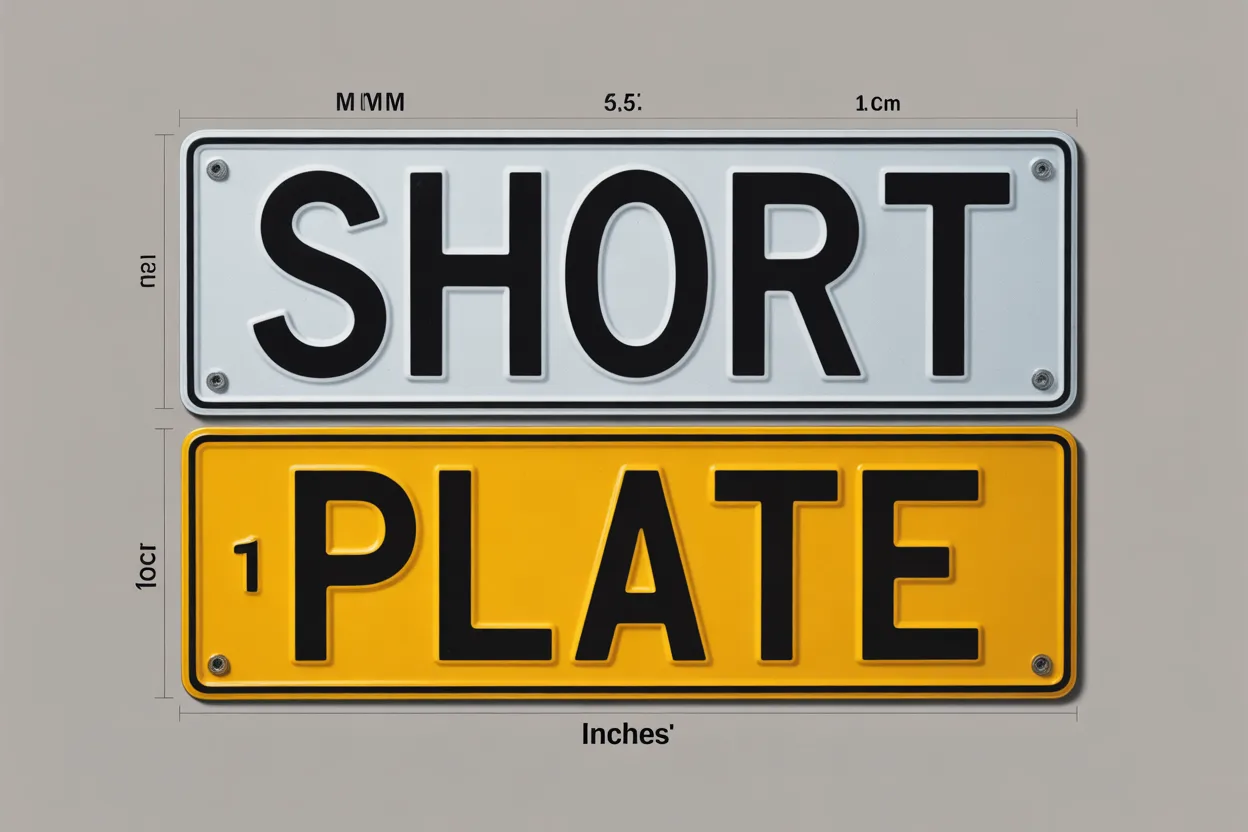
Shorter plates let you use narrower plates while keeping legal letter sizes. Common sizes are 330mm × 111mm (3-4 letters), 355mm × 111mm (5 letters), 406mm × 111mm (6 letters), and 465mm × 111mm (7 letters). These plates appeal to owners who want a clean look. Even with less width, they must keep the 111mm height and all letter gap rules. The width drop comes only from shorter plates. For small plate options, see our short number plates.
Big Number Plates
Posh cars often use big plates for better view and status. Common sizes are 520mm × 165mm or 565mm × 184mm. These plates give more edge around letters, making them stand out. Common on high-end 4x4s and cars, they keep all legal letter specs while giving a unique look. The extra space doesn’t break rules as long as letter sizes and gaps stay right.
Bike Plates
Bike plates are small at 228mm × 178mm, often showing plates in two lines with 13mm between rows. The small sizes fit the small space on bikes. Even with their size, they must meet set letter needs: 64mm height, 44mm width, and right gaps. Bike plates are back-only for bikes made after Sept 2001. Their design puts work first while staying legal.
Import Car Plates
Cars from places with different plate types often need special sizes. The usual import plate is 305mm × 152mm, used only if usual UK plates won’t fit. These plates must still meet all letter size and gap rules. Owners must show proof of space limits to use these sizes. Import plates link world car designs with UK rules while making sure plates show right.
Old Car Plates
Cars made before Jan 1, 1980, can have old status and show black and silver plates. These are often 520mm × 111mm with white or silver letters on black backs. The font looks like pre-1973 styles, giving a old look. Even with their classic look, they must be set right and fixed well. These plates are only for old cars that meet the rules and can’t be used on new cars. For old-style plates, see our retro number plates and classic number plates.
Number Plate Stuff and Rules
All UK plates must follow British Standard BS AU 145e (after Sept 2021). This sets strong, shiny stuff: white for front plates, yellow for back. Letters must be non-shiny black. Plates must show the BS AU 145e mark and seller info. Safety parts include unique seller IDs and tamper-proof build. Plates go through tough tests for UV light, dirt, and hot and cold (-40°C to +80°C). Signed-up sellers must keep quality checks and check buyer papers.
British Standard BS AU 145e
Since Sept 2021, all new plates must meet BS AU 145e. This rule makes plates last longer, shine better, and be safer than the old BS AU 145d. It has 2,275 hours of UV tests – 2.5 times more than some EU tests. The rule needs solid black letters and better safety parts to stop cloning. Following the rule makes sure plates stay clear and whole for their life, often many years of normal use.
Stuff Needs
Plates need set shiny stuff: white for front, yellow for back. These must meet min shine levels. Letters must be non-shiny black and fixed for good – not stickers. The stuff must handle weather without fading or breaking. The mix of shiny backs and non-shiny letters makes them easy to read in all light while keeping them safe from tampering.
Must-Have Marks
Every legal plate must show the British Standard number (BS AU 145e for new plates) and seller info with name and postcode. These marks must be for good and clear to see. They help police track plates to where they came from and check if they follow rules. Missing or wrong marks cause MOT fail and fines. The marks are often at the bottom right without hiding any letters.
Safety Parts
New plates have anti-clone parts. Each signed-up seller has a unique ID. Tamper-proof build shows signs if someone tries to take it off. Letters must be part of the plate, not stuck on. These parts help fight plate theft and cloning, used for fuel theft, charge dodging, and other crimes. The safety parts work well but are still easy to make.
Weather Tests
BS AU 145e needs full weather tests. Plates must handle long UV light without fading. Dirt tests make sure they stay clear when dirty. Heat tests check if they work from -40°C to +80°C, with quick changes. Wet and salt spray tests copy hard times. These tough rules make sure plates work well for their whole life in all UK weather.
Quality Checks
Signed-up sellers must use quality checks and keep making records. They can only sell plates to buyers with good ID and right papers. Sellers must check buyer ID and plate rights before making plates. This system stops bad plate making and helps fight car crime. Regular checks make sure they keep following all rules and standards.
Number Plate Fitting Ways
Usual number plate screws are 4.8mm wide and 19-24mm long, with self-tapping threads and pan heads. Color picks are yellow (back), white (front), black, or blue. Other ways to fix include sticky pads for no-drill fit and sticky pads for rented cars. Number plate holders give safety and easy swap. Fitting needs cleaning the spot, right placing, careful drilling if needed, and tight fit without over-tight. Regular care includes soft cleaning and timely safety checks.
Car Number Plate Screw Size
Usual screws are 4.8mm wide and 19-24mm long with self-tapping threads and pan heads. Pozidrive or Phillips drives are common. Color picks match plate backs: yellow for back, white for front, with black as a good fit. Using the right size stops harm to plates or cars. Screws should be tight but not too much to stop cracking acrylic plates. Right screw pick makes sure plates stay on for good. For good screws, see our number plate screws.
Other Fitting Ways
Sticky pads give no-drill fit with strong double-sided foam tape. Sticky pads give pre-cut sticky pads for easy take-off. Number plate holders (plastic or metal frames) guard edges and make swap easy. These other ways work for plastic bumpers or rented cars where drilling is bad. Each way must give safe fit without hiding letters or hurting plate quality. The pick depends on car stuff and what the owner likes. For safety frames, check our number plate holders.
Fitting Guide
Fitting needs screwdriver, drill (if needed), measuring tape, spirit level, and cleaning stuff. First, clean the fitting spot well. Place the plate using a spirit level and mark hole spots. Drill holes a bit smaller than screw width if needed. Fit the plate loose, check it’s straight, then tighten screws firm but not too much. Final checks make sure it’s safe, placed right, and letters show well. Pro fitting is best for top results.
Common Fitting Errors
Over-tightening screws can crack acrylic plates or cause bends. Wrong placing includes putting plates too close to edges or hiding lights. Using wrong fixings like metal screws on plastic bumpers causes harm. Other errors include not level fitting or using screws that are too long, risking harm to car parts. Right way and right stuff stop these common issues that could cause MOT fails.
Care Tips
Clean plates often with mild soap and water, skip strong stuff. Dry with a soft cloth to stop water marks. Check now and then that fixings stay tight and look for cracks or fading. Make sure they still shine as they should. Swap bad or faded plates at once from signed-up sellers. Good care makes plates last longer and makes sure they follow rules at all times.
Legal Rules and Fines
The Road Vehicles (Display of Registration Marks) Rules 2001 and BS AU 145e rule number plates. Common breaks include wrong letter style, bad sizes, illegal fonts, or missing marks. Fines can be £1,000 with an auto MOT fail. MOT tests check state, safety, style, and marks. Police use fines, court cases, and maybe car clamping. Regular checks, pro fitting, and knowing news help stop fines. Old cars and imports have special cases.
The Legal Base
Number plate rules are enforced through the Road Vehicles Rules 2001 and British Standard BS AU 145e. These rules set letter sizes, gaps, stuff, and show needs. The base mixes rules with useful choice for different car types. Knowing these rules is key for all car owners to stay road legal and dodge fines.
Common Breaks and Fines
Wrong letter style, bad sizes, illegal fonts, or missing marks can lead to £1,000 fines and auto MOT fail. Fines may also include taking the plate away. Police are strict because clear plates are key for police and safety. Even small breaks can cause big costs. Following rules is much cheaper than facing fines.
MOT Test Needs
MOT test checks make sure plates are fixed well with no cracks, fading, or harm. Testers check right letter height, gaps, and font. Colors must be black on white/yellow with no shiny letters. Needed marks are the BS AU 145e number and seller info. Any issue causes an auto fail. Plates are one of the most common MOT fail points, making regular checks key.
Police and Fines
Police and DVSA use plate rules through road checks and MOT tests. Fines often start at £100 but can be £1,000. Bad cases may go to court with bigger fines. Cars with bad plates may be clamped until legal swaps are fitted. Police focus on making sure all plates meet view and safety rules for public safety.
Common Issues Causing Fail
Letter issues include wrong sizes, gaps, or fancy fonts. Plate issues cover cracks, fading, or peeling shiny stuff. Fitting issues include loose fit, wrong placing, or hidden letters. These issues make plates hard to read and less safe, leading to MOT fail. Regular checks help find and fix these issues before tests.
Special Cases and Exceptions
Old cars (pre-1980) may show black and silver plates. Import cars can use smaller plates if space is tight, with proof needed. Trade plates have different show rules. These cases fit special car types while keeping core read rules. Owners must check if they can use any exceptions and make sure plates meet all rules that apply.
How to Dodge Fines
Check plates each month for harm and safety. Clean often to keep shine. Use signed-up sellers for new plates. Keep up with rule changes. Check plates before MOT tests and swap bad ones at once. Pro fitting makes sure they fit right. These easy steps stop most rule issues and fines that come with them.
Common Questions About UK Number Plate Sizes
Are all plates the same size? No, while 520mm × 111mm is usual, legal needs focus on letter sizes, letting sizes change. What’s the legal size? Min height is 101mm for one-line or 199mm for two-line plates. Usual size is 520mm × 111mm. In cm: 52cm × 11.1cm; in inches: 20.5″ × 4.4″. Letter height is 79mm for cars, 64mm for bikes. Smaller plates are okay for shorter plates. 4D plates are legal if they meet letter needs. Flags are okay on the left side. Usual screws are 4.8mm wide, 19-24mm long. Front plates are needed for most cars. Only signed-up sellers can give plates.
Are All Car Number Plates the Same Size?
No, while 520mm × 111mm is the usual size, UK law doesn’t set fixed plate sizes. Instead, it sets min letter sizes and gaps. This lets sizes change for different cars while keeping them easy to read. Bikes, imports, and cars with less space use different sizes. All plates must meet the same letter needs no matter their size.
What Is the Legal Size of a Car Number Plate?
UK law doesn’t set one legal plate size but sets mins based on letter needs. One-line plates must be at least 101mm high; two-line plates need at least 199mm height. Width changes by plate length. A 7-letter one-line plate must be at least 460mm wide. The focus is on letter sizes, not plate size.
What Is the Usual Size of a Car Number Plate?
The usual size is 520mm × 111mm (20.5″ × 4.4″). This size fits the usual 7-letter plate with right gaps and edges. It became the norm because it fits most car types while meeting all legal needs. While other sizes exist, this is still the most seen on UK roads.
What Are Car Number Plate Size in cm and Inches?
Usual plates are 52cm × 11.1cm or 20.5″ × 4.4″. Other picks include 4×4 plates at 28cm × 20.3cm (11″ × 8″) and bike plates at 22.8cm × 17.8cm (9″ × 7″). These sizes help owners pick right plates for their cars while making sure they meet letter needs.
What Are the Car Number Plate Letter Size Needs?
Car letters must be 79mm high, 50mm wide (except “1” and “I” at 14mm), with 14mm line width. Gaps need 11mm between letters and 33mm between plate groups. Bike letters are smaller: 64mm height, 44mm width, 10mm gap, 30mm between groups. These exact sizes make sure all plates are easy to read.
Can I Use Smaller Number Plates on My Car?
Yes, if your plate is shorter. Min widths are 277mm for 4 letters, 348mm for 5 letters, and 399mm for 6 letters, all at 101mm height. Even with less width, all letter size and gap rules must be kept. The width drop comes only from having fewer letters, not from smaller letters.
Are 4D Number Plates Legal?
Yes, 4D plates with raised letters are legal if they meet all usual needs: 79mm height, 50mm width, right gaps, solid black non-shiny letters, and right back colors. The raised part doesn’t change if they’re legal as long as the basic specs are met. For good 4D picks, see our 4D number plates.
Can I Show My Flag on My Number Plate?
Yes, some flags are okay on the left side: Union Jack, St George Cross, Welsh Dragon, or St Andrew Cross. They must be non-shiny and not hide letters. You can add national IDs (ENG, CYM, SCO) if you like. A green flash is okay for zero-fume cars. These adds must not hurt the plate’s main job.
What About Number Plate Screw Size?
Usual screws are 4.8mm wide and 19-24mm long with self-tapping threads and pan heads. Color picks are yellow (back), white (front), black, or blue. Using the right size stops harm to plates or cars. Screws should be tight but not too much to stop cracking acrylic plates.
Do I Need a Front Number Plate?
Yes, most UK cars need both front and back plates. Exceptions include bikes made after Sept 2001 (back only), some old cars, and some special cars. Front plates must be white with black letters; back plates must be yellow. Missing front plates cause MOT fail and fines.
Can I Make My Own Number Plates?
No, only signed-up number plate sellers can make plates. They must check your ID and right to the plate before making them. This system stops bad plate making and helps fight car crime. Needed papers are proof of ID (driving license, bill) and right (V5C logbook).
What Happens If My Number Plate Is Bad?
Bad, faded, or cracked plates must be swapped at once with legal plates from a signed-up seller. Driving with bad plates can lead to £1,000 fines and MOT fail. Regular checks help find harm early. Swap is easy through signed-up sellers with right papers.
Are Personal Plates Different Sizes?
Personal plates follow the same size and style rules as usual plates. The only change is the letter mix – all physical needs stay the same. Whether showing a usual or personal plate, plates must meet the same letter sizes, gaps, and stuff rules.
Where to Buy Legal Number Plates
Only Signed-up Number Plate Sellers (RNPS) can legally give number plates. Find them through the state site or look for RNPS proof. Needed papers are proof of ID (driving license, bill) and right (V5C logbook). Sellers include high street shops, online stores, and mobile services. Pick good sellers with good reviews, quality promise, and many picks. Number Plate Man gives good plates with many styles and extras. Skip bad sellers and bad plates.
Signed-up Number Plate Sellers
Only signed-up number plate sellers can legally sell plates. They’re DVLA-approved and must check buyer ID and right. Find them via the state site or look for their proof. Sellers give ID checks, right checks, good plates, and pro fitting if you want. Using signed-up sellers makes sure you follow rules and helps fight plate crime.
Needed Papers
When buying plates, give one ID paper (driving license, bill, bank note) and one right paper (V5C logbook, V750, V778). Sellers must check these before making plates. These papers prove who you are and your right to show the plate. The system stops bad plate making and guards against fraud.
Types of Number Plate Sellers
Sellers are high street shops (car parts, garages), online stores (special sites, big stores), and mobile services. Each gives good points: fast pick from shops, ease from online sellers, or at-home help from mobile ones. All must be signed-up and follow the same check steps.
What to Look for in a Seller
Pick sellers with good reviews, known name, and quality promise. They should show BS AU 145e follow, give warranties, and use good stuff. Look for staff who know, clear prices, pro fitting, and many plate sizes and styles. Good sellers put rules and help first over low prices or short cuts.
Number Plate Man: Your Trusted Seller
Number Plate Man gives good plates in many styles: usual, 3D, 4D, ghost, short, hex, metro, retro, and classic looks. Extras are holders, screws, key rings, L-plates, P-plates, and bike plates. As a signed-up seller, they make sure DVLA rules, good stuff, pro help, fair prices, and fast post. Their wide range meets many needs while keeping all legal rules.
Price Thoughts
Usual plates cost £15-£30, two-line plates £20-£40, and short plates £25-£50. Top picks like 3D/4D plates are £40-£80. Added costs are fitting (£10-£20), frames (£5-£20), and fast post (£5-£15). Prices change by seller, stuff, and custom picks. While cost matters, rules must never be hurt for lower prices.
Red Flags to Skip
Skip sellers with no RNPS proof, very low prices, or no paper needs. Say no to bad plates that don’t meet size needs, have wrong fonts, or lack needed marks. Steer clear of bad ways like no ID checks, no right checks, or pushy sales. These red flags show possible illegal acts.
Online vs. In-Person Buy
Online buying gives ease, more picks, easy compare, and home post. In-person buy gives fast pick, pro fitting, face-to-face help, and see before you buy. Both ways work when using signed-up sellers. The pick depends on what you like, how fast you need it, and if you want pro fitting.
Making Your Buy
Pick a signed-up seller, get needed papers, pick plate type and size, give plate info, finish checks, look over and confirm your order, then set up fitting or pick-up. After buy, keep receipts, check if they follow rules, fit right, and sign up for warranties. Doing these steps makes sure a smooth, legal buy and right plate fit.
Conclusion: Your Full Guide
This guide covered all parts of UK number plate sizes: usual sizes (520mm × 111mm), letter specs (79mm height for cars), stuff rules (BS AU 145e), legal needs, and buying from signed-up sellers. Following rules makes sure road safety, dodges £1,000 fines, stops MOT fail, and keeps car safety. Think about your car type, plate length, and what you like when picking plates. For legal plates that meet all UK needs, Number Plate Man gives many styles and pro help. Stay safe, legal, and sure with right sized and set number plates.
Key Points
Usual plates are 520mm × 111mm, but legal needs focus on letter sizes: 79mm height for cars, 64mm for bikes, with set gaps. Plates must follow BS AU 145e, show black letters on shiny backs, and show seller info. Following rules makes sure plates are easy to read, dodges fines, and helps car safety. Many sizes fit different cars while keeping letter rules.
Why Rules Matter
Right sized and set plates help road safety by making cars easy to ID. They help crisis teams and help police cameras. By law, following rules dodges £1,000 fines and MOT fails. Safety parts on legal plates cut cloning and theft risks. Keeping good plates also helps car sale value. The good points are much more than the small cost of legal plates.
Picking Right
Pick plates based on car type: usual cars use 520mm × 111mm one-line, 4x4s often use 280mm × 203mm two-line, bikes use 228mm × 178mm. Think about plate length for size picks. Personal likes are 3D/4D styles within rules. Always put rules first over looks. Ask signed-up sellers for pro help on the best picks for your car.
Ready to Buy Good Number Plates?
Number Plate Man gives legal plates like 4D, short, and 3D styles, plus screws and extras. As a signed-up seller, they make sure DVLA rules, good stuff, pro help, fair prices, and fast post. Their wide range meets many needs while keeping all legal rules. For peace of mind and sure rules, pick a good signed-up seller.
Last Thoughts
Knowing number plate rules stops legal issues and makes sure your car stays road-ready. While rules may seem hard, focusing on letter sizes, gaps, and stuff makes it easy. When in doubt, ask signed-up sellers or state guides. The small cost of legal plates stops big fines and hassle. Keep up with news, follow rules, and drive with sure with right sized and set number plates.