
Classic number plates are more than just car ID tags. They are pieces of automotive history that tell stories of the UK’s rich motoring past. Whether you’re a classic car enthusiast, collector, or simply appreciate vintage aesthetics, classic number plates offer a distinctive way to connect with heritage while adding timeless style to your vehicle. This comprehensive guide covers everything you need to know about classic number plates in the UK, from their fascinating history and various styles to valuation insights and purchasing tips, empowering you to make informed decisions when selecting the perfect plates for your cherished vehicle.
The History of UK Number Plates
The Start of British Number Plates
The story of classic number plates began in 1903. This was when the Motor Car Act brought the first car sign-up system to the UK. The first plates had a simple style. They had one or two letters to show where the car was signed up. Then came a unique number. London’s first plate, A1, was famous. Earl Russell got it for his Napier car. This set a trend for low-number plates that people still want today.
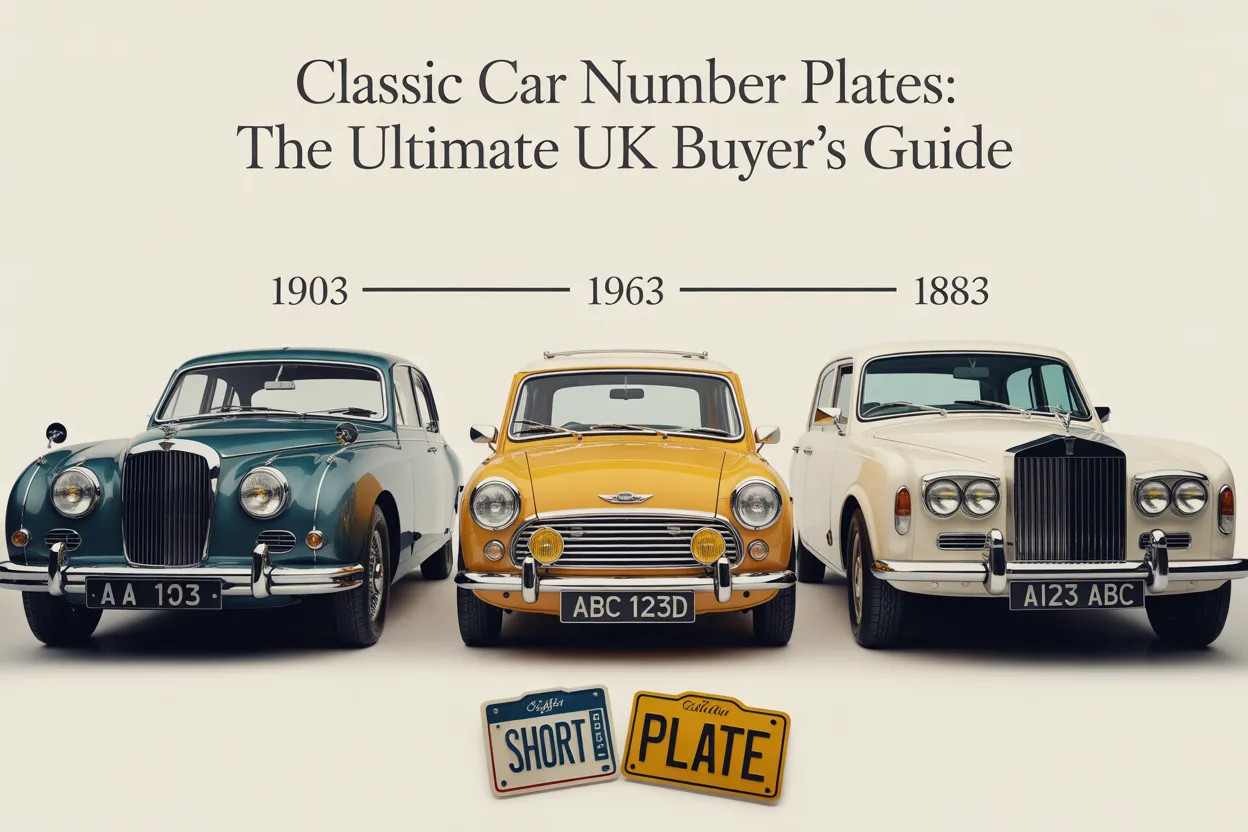
As more people drove cars, the system had to change. By the 1930s, the style grew to three letters and then three numbers (like ABC 123). This created the first classic number plate style that many fans still seek today. These plates from the 1930s to 1960s are seen as the best years of British driving. Fans love them for their history and look.
Changes Through the Years
The years after World War II brought big changes to number plate design. These changes showed the UK’s changing car scene. In 1963, the suffix system began. It added a letter at the end to show the year the car was signed up (like ABC 123A). This style lasted until 1983. Then it was replaced by the prefix system (A123 ABC). This lasted until the current style began in 2001.
Through these changes, classic number plates from each time got their own look and charm. Plates from the 1950s and 1960s, with their simple letter-number mix, make you think of nice British sports cars on country roads. Meanwhile, 1970s suffix plates bring back memories of a time of bold design and big social change. Knowing this history helps fans value not just the look of number plates UK but also their place in the UK’s wider social and car history.
Understanding Classic Number Plate Styles
Early Dateless Plates (1903-1963)
Dateless plates are the first classic number plates style. They are still the most wanted by fans and buyers. These plates have no year mark. They usually have one of two styles: a letter code then numbers (like A 123) or numbers then a letter code (like 123 A). The letter code first showed where the car was first signed up. London was A, Birmingham was B, and so on.
The value of dateless classic car number plates depends a lot on how much people want the letter mix and the number. Single-letter plates with low numbers (like A 1 or B 2) cost the most, often reaching six figures at sales. Even less special mixes can still be worth a lot, especially if they spell words or names or have numbers seen as lucky or important. These plates are the top of number plate collecting. They are seen as the best status symbol among classic car fans.
Suffix Plates (1963-1983)
The suffix style began in 1963. It was the first to include a year mark. This was shown by a letter at the end of the sign-up (like ABC 123D, where D means 1966). This system was made to help police and buyers tell how old a car was. For buyers, number plates from this time offer an easier way to start collecting compared to dateless plates.
Suffix classic number plates UK from the 1960s, especially those with early letters (A, B, C), are worth a lot. People like them because they link to the best years of British driving and the iconic cars of that time. Plates from this time often appear on classic Minis, Jaguars, and other loved British cars. This creates a perfect period-correct mix that makes the car look more real and valuable.
Prefix Plates (1983-2001)
In 1983, the system changed to create prefix plates. The year mark moved to the start of the sign-up (like A123 ABC, where A means August 1983 to July 1984). While these are newer than suffix plates, early prefix plates (especially A and B series) now have classic number plate status. This is due to their age and link to memorable cars from the 1980s.
Prefix car number plates give buyers a more low-cost choice while still giving historical value. The first prefix plates came when hot hatchbacks became popular and when British Leyland was ending. This makes them appeal to fans of 1980s and early 1990s cars. As these plates get older, their value and appeal among buyers should keep growing.
Legal Rules for Classic Number Plates
DVLA Rules and Compliance
When dealing with number plates, knowing the legal rules is key. This makes sure your plates stay road-legal and follow current rules. The DVLA’s official guidance sets specific needs for all number plates, including classic number plates UK. These rules cover things like character size, font, spacing, and materials used.
For classic number plates to be road-legal, they must show characters in the required Charles Wright font. The height must be 79mm and width 50mm. The space between characters must be 11mm, and between character groups 33mm. Also, plates must be made of shiny material and show the British Standard mark (BS AU 145d). They must also show the supplier’s name and postcode. Not following these rules can lead to fines up to £1,000 and MOT failure. So, it’s key to make sure your classic car number plates meet all current standards.
Historic Vehicle Status and Number Plates
Cars called “historic” (those built before 1 January 1981) get some breaks for number plate display. These cars can legally show number plates with black letters on a white or yellow back. This copies the look of plates from when the car was first made. This break lets owners keep period-correct looks while staying road-legal.
But this break only applies if the number plate truly shows what would have been used when the car was new. The Federation of British Historic Vehicle Clubs gives detailed help on this break and helps owners know the rules. It’s worth noting that while historic cars can use period-correct black and silver plates, they must still make sure the characters can be read and the plate is in good shape. This mix of real look and legal rules is a key thing for owners of number plates UK.
Types of Classic Number Plates
Dateless Number Plates
As said before, dateless plates are the first classic number plates style. They are still the most prized by fans. These plates have no year mark, making them timeless adds to any car. Dateless plates are very valuable when they have wanted letter mixes, low numbers, or spell words and names.
The market for dateless classic car number plates is very active. Prices range from a few hundred to several hundred thousand pounds. The value is set by things like how rare they are, how much people want the mix, and history. For fans, dateless plates are the best buy. They offer both good looks and investment value. These plates can be moved to any car no matter its age, making them good adds to any group.
Year-Specific Classic Plates
Year-specific plates, including suffix and prefix styles, give fans the chance to buy classic number plates that match the time of their car. These plates are very liked by owners who want period-correct looks and historical truth. For example, a 1965 Austin Mini would look great with a suffix plate from the C series (1965). This makes a real period look.
While often less costly than dateless plates, year-specific number plates in the UK still hold great value. This is especially true for plates from wanted years or with nice letter mixes. These plates let fans create a full historical package. This makes both the look and truth of their classic cars better. As these plates get older, their value and appeal among buyers should grow. This makes them good buys for fans.
Cherished and Personalised Classic Plates
Cherished plates are a special type of classic number plates that have been picked for their personal meaning to the owner. These might include plates with initials, names, birth years, or other special mixes. While cherished plates can be any age, those with classic styles are very prized. They mix personal meaning with historical appeal.
Personalised car number plates give owners the chance to make a unique ID for their car. They also keep period-appropriate style. These plates often become family treasures. They are passed down through generations or moved between cars. The market for cherished plates stays strong. Buyers will pay high prices for mixes that have personal meaning or show clever wordplay or special sequences.
How to Value Classic Number Plates
Factors Affecting Value
Valuing classic number plates means looking at many factors that affect how much people want them and their market price. The most key factors include:
- Rarity: Plates with unique mixes or from early times are often worth more
- Want of characters: Letters that spell words, names, or initials cost more
- Age: Older plates, especially dateless ones, often have more value
- Condition: Well-kept plates with original materials are worth more
- History: Plates with interesting past or previous famous ownership can add value
- Market trends: Like any collectible, classic number plates UK change with market shifts
Knowing these factors helps fans make smart choices when buying or selling classic car number plates. It’s worth noting that value is set by what someone will pay. So, market demand plays a key role in setting prices.
Valuation Methods and Resources
Several ways exist to find the value of classic number plates:
- Auction results: Looking at prices from special number plate sales gives real market data
- Dealer price lists: Good number plate dealers show current asking prices for similar plates
- Online marketplaces: Sites that sell number plates show current market values
- Expert valuation services: Special firms offer formal value checks for important plates
For those looking to buy or sell classic number plates UK, it’s wise to check many sources to set a good value range. The Driver and Vehicle Licensing Agency also gives help on the move process and fees. This can affect the total cost of getting a plate. Remember that condition, realness, and papers all play key roles in setting the final value of classic car number plates.
Where to Buy Classic Number Plates
DVLA Auctions and Sales
The DVLA itself is a main source for classic number plates. This is especially true for plates that have never been used before. The DVLA often holds sales where fans can bid on wanted signs, including dateless plates and other classic styles. These sales happen both in person and online. This makes them open to fans across the UK.
DVLA sales offer the plus of sure realness and clear history. This is very key when buying valuable classic number plates UK. But, the fight can be strong, especially for wanted mixes. Prices often go over what experts guess as passionate fans fight for prized signs. The DVLA website gives news on coming sales and the sign-up process for possible buyers.
Specialized Number Plate Dealers
Special dealers are another key source for classic number plates. This is especially true for plates that have been owned before and are being sold again. Good dealers offer skill in value checks, realness checks, and move help. This makes them key partners for both new and expert fans.
When picking a dealer for classic car number plates, look for well-known firms with good reviews and clear prices. Good dealers will give full details about each plate’s history, state, and legal status. They should also help with the move process. This makes sure all papers are done right. While dealer prices may be higher than private sales, the added safety and skill often make the extra cost worth it for valuable plates.
Private Sales and Online Marketplaces
Private sales through classic car clubs, online groups, and special sites offer another way to get classic number plates. These sites can sometimes give better prices than dealers or sales. But they need more care from the buyer.
When buying classic number plates UK through private ways, it’s key to check the seller’s ownership, the plate’s realness, and its legal status. Ask for papers that prove ownership and the right to move the sign-up. Be wary of deals that seem too good to be true. Think about using a safe payment service for high-value deals. This protects both buyer and seller.
Caring for Classic Number Plates
H3: Maintenance and Preservation
Proper care is key to keep the value and look of classic number plates. Different materials need different care:
- Metal plates: Clean with mild soap and water. Avoid rough cleaners that could harm the finish
- Acrylic plates: Use special acrylic cleaners and soft cloths to stop scratches
- Vintage plates: Ask care experts for rare or historically important plates
Regular checks are also key to catch early signs of wear. Look for fading, rust, or harm to mounting holes. Fixing these issues fast can stop more harm and keep the plate’s value. For very valuable classic car number plates, think about expert care services. This ensures proper care and preservation.
Storage and Display
When not in use, classic number plates should be stored with care to stop harm:
- Environment: Store in a place with steady temperature away from sun, wet, and heat or cold changes
- Position: Store flat or up with good support to stop bending
- Protection: Use safe materials for wrapping and storing to stop chemical harm
- Documentation: Keep all key papers, including move certificates and history, with the plate
For fans who show their classic number plates UK, think about using UV-safe glass in frames. This stops fading while still letting the plate be seen. Proper storage and display not only keep the plate’s state but also keep its value for future fans.
H2: Common Questions About Classic Number Plates
Legal and Transfer Questions
Q: Are classic number plates legal to use on modern cars?
A: Yes, classic number plates can be legally moved to modern cars. But they must meet current display rules. The DVLA’s transfer rules explain the process and any limits that may apply.
Q: How do I move a classic number plate to my car?
A: Moving classic car number plates means filling in a V317 form, paying the move fee, and giving proof of ID and car ownership. The process usually takes 2-4 weeks to finish.
Q: Can I make a copy of a classic number plate?
A: Making copies of classic number plates UK is often not allowed. It could be seen as fraud. Only real plates with proper papers can be legally made and shown.
Q: Do classic number plates affect my insurance?
A: Classic number plates usually don’t affect insurance costs directly. But you should tell your insurer of any changes to your car, including number plate moves.
Valuation and Investment Questions
Q: Are classic number plates a good investment?
A: Many classic number plates have proven to be great investments. Wanted plates often grow a lot in value over time. But, like any collectible market, values can change. So, research and expert help are advised.
Q: How do I know if a classic number plate is real?
A: Real classic car number plates should come with proper papers. This includes move certificates and history of ownership. Good dealers and the DVLA can help check realness.
Q: What makes one classic number plate worth more than another?
A: The value of classic number plates UK is set by things like rarity, want of the mix, age, condition, and history. Plates with meaningful words, names, or low numbers often cost more.
Q: How do I insure a valuable classic number plate?
A: While classic number plates themselves aren’t usually insured alone, their value should be part of your classic car insurance. Special insurers may offer specific cover for very valuable signs.
H2: Why Choose NumberPlateMan for Classic Number Plates
H3: Industry Skill and Experience
With over 15 years in the number plate field, NumberPlateMan has become the UK’s top provider of classic number plates. Our skill includes:
- Special Knowledge: Deep grasp of classic plate styles, values, and history
- Making Excellence: Top-class making sites that can copy classic styles while meeting modern legal needs
- Industry Links: Links with fans, dealers, and sales houses to find rare and wanted plates
- Historical Research: Access to large databases and tools to check the realness and history of classic plates
Our team has DVLA-trained staff, car history experts, and passionate fans who know what makes classic car number plates special. We mix this skill with great customer service. This makes sure every client finds the perfect plate for their needs.
Quality and Craft
At NumberPlateMan, we’re proud of the great quality of our classic number plates:
- Real Materials: We use period-right materials when possible. This ensures our plates look and feel real
- Precise Making: New tech mixed with old skills to make plates that meet high standards
- Legal Compliance: All our plates meet current DVLA rules while keeping classic looks
- Quality Checks: Strict review processes ensure every plate meets our high standards before reaching our customers
Whether you want a true copy of a classic number plate or a new take on a classic style, our focus on quality ensures you’ll get a product that goes beyond your hopes.
Customer Happy Promise
We stand behind every product we sell with full customer help:
- Expert Help: Our experts help you navigate the details of getting and moving classic number plates UK
- Clear Pricing: No hidden fees or surprises – we give clear, upfront prices for all our products and services
- Move Help: We handle all the papers and steps of moving your plate to your car
- After-Sales Help: Ongoing help with care, value checks, and future moves
Don’t just take our word for it – here’s what our customers say:
“The classic number plate I bought from NumberPlateMan was the perfect final touch for my 1965 E-Type. Their knowledge of period-correct plates and help with the move process was priceless.” – James T., London
“As a fan of classic bikes, finding the right classic bike number plates has always been hard. NumberPlateMan not only helped me find a perfect period plate but also made sure all the papers were in order.” – Sarah K., Manchester
“The quality of the classic motorbike number plates I got from NumberPlateMan went beyond what I hoped. Their care for historical detail while meeting modern legal needs is the best.” – Michael R., Birmingham
Conclusion: Make Your Classic Car Better with the Perfect Number Plate
Classic number plates are more than just car ID tags. They’re pieces of British car history that add style, value, and realness to your classic car. Whether you’re a long-time fan or just starting your journey into classic cars, the right number plate can change your car’s look. It connects you to Britain’s rich car past.
At NumberPlateMan, we’re passionate about helping fans find the perfect classic car number plates for their cars. Our skill, focus on quality, and customer-first approach make us the best partner for all your classic plate needs. From dateless plates to period-correct suffix and prefix signs, we offer a wide range of classic number plates to suit every taste and budget.
Ready to find the perfect classic number plate for your car? Look at our range and see the difference that the right plate can make!
Primary CTA Button: Browse Our Classic Number Plate Collection
Secondary CTA Button: Get Expert Value Check for Your Plate
Contact Information:
Have questions about classic number plates? Call our experts at 0800 123 4567 or email info@teal-skunk-691654.hostingersite.com
About the Author
This full guide to classic number plates was made by the NumberPlateMan team of car history fans and number plate experts. With over 15 years in the UK number plate field, our experts are DVLA-trained and passionate about saving Britain’s car past.
Skills & Proof:
- DVLA Certified Plate Suppliers
- Members of the Federation of British Historic Vehicle Clubs
- ISO 9001:2015 Quality Management Certified
- Regular writers for classic car magazines
- Trained in current UK road traffic laws
- Active in classic car shows and events