
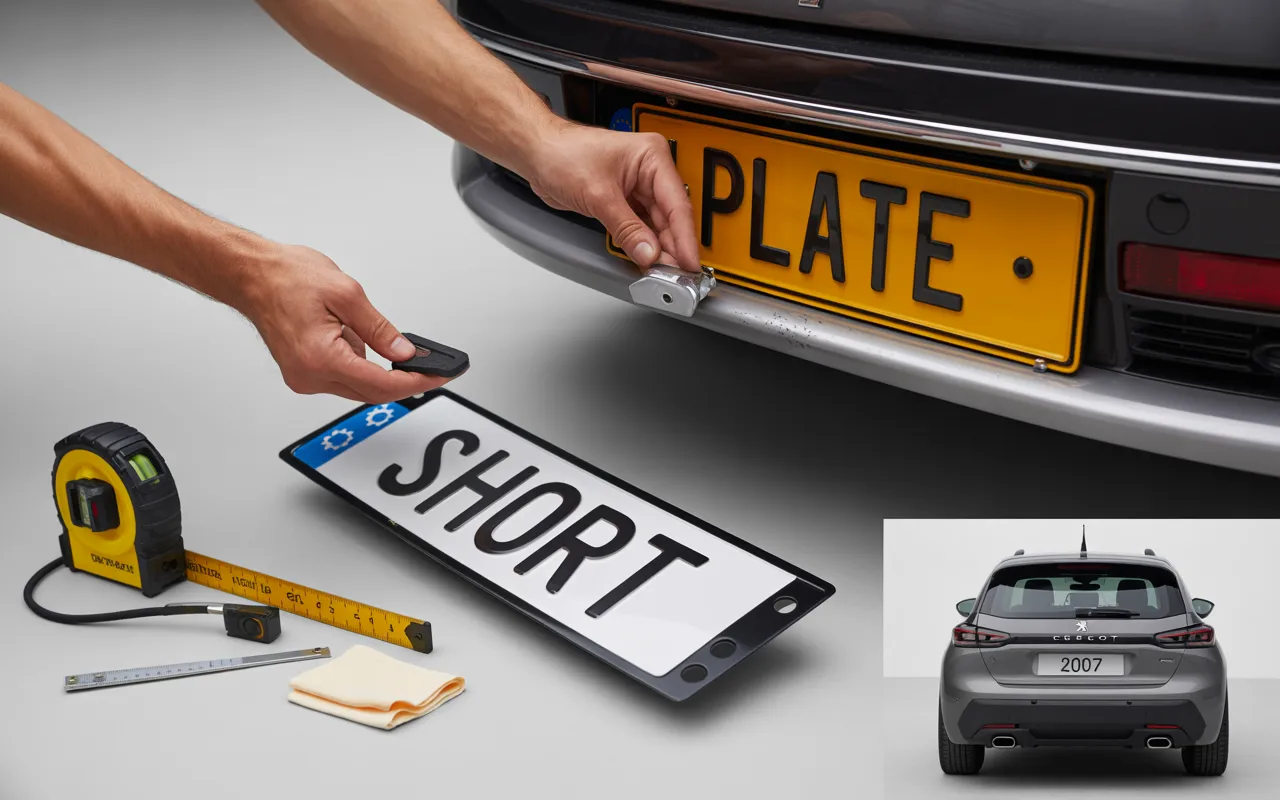

Plate fallen off? Don’t worry! Our full guide shows you just how to reattach a car number plate yourself. This saves time and cash while keeping you legal. Whether you drive a Peugeot 207 or any car, we’ll walk you through each step with expert tips and pro methods.
Reattach Number Plate Yourself – Get Started
Is It Legal to Reattach a Number Plate Yourself in the UK?
Yes, you can fix your own number plate in the UK, but you must follow DVLA rules to stay legal. The law says your plate must be:
- Fixed well so it won’t fall off when you drive
- Easy to see with nothing blocking it
- Spaced right with the correct font as DVLA says
- Put in the right place on your car
Legal Warning: Wrong fitted plates can lead to:
- MOT test fail
- Fines up to £1,000
- Points on your license
- Your car being seen as not road-safe
Key Legal Rules:
- Letters must be 79mm high and 50mm wide
- Space between letters must be 11mm
- Space between groups must be 33mm
- Plate must be straight up or nearly straight up
When You Need to Reattach a Number Plate
Knowing when to fix your plate helps stop more harm and legal trouble. Here are the top reasons:
Common Reasons for Plate Falling Off:
- Bad weather: Heavy rain, snow, or hot sun can weaken glue
- Car wash issues: Auto car washes can knock off loose plates
- Old parts: Old glue pads or screws wear out over time
- Bump damage: Small knocks can make plates loose
- Car shake: Driving shake can make screws loose over time
Signs Your Plate Needs Fixing:
- Plate hangs loose or sits at an angle
- Glue pads show or peel off
- Screws are gone or loose
- Plate makes noise when you drive
- Water or dirt gets behind the plate
Pro Tip: Check your number plates once a month as part of your car care.
Essential Tools and Materials
Before you learn how to reattach a number plate, get these key items:
Must-Have Tools:
- Small cloth (for cleaning)
- Surface cleaner (rubbing alcohol works best)
- Glue pads (car-grade, safe in all weather)
- OR screw kit (steel screws with caps)
- Spirit level (for straight lines)
- Measuring tape (for exact placing)
- Clean rag (for final wipe)
Good to Have:
- Drill with small bit (if making new screw holes)
- Screwdriver (for tightening screws)
- Masking tape (for short-term holding)
- Pencil (for marking spots)
- Hair dryer (for taking off old glue)
Where to Buy Supplies:
Number Plate Fixing Kit – Full kit with all you need Adhesive Pads Only – Top car glue pads Screw Kits – Steel screws with caps that match
Adhesive Pads vs Screws: Which Method Works Best?
Picking the right way is key when you learn how to reattach a car number plate. Here’s our full guide:
| Method | Best For | Good Points | Bad Points | How Long It Lasts |
|---|---|---|---|---|
| Glue Pads | Flat surfaces, quick fixes | Fast to put on, no tools, clean look | Less good in bad weather, not best for curved spots | 6-18 months |
| Screws | Curved bumpers, long-term fixes | Very safe, good in all weather, lasts long | Needs drilling, shows on the plate | 2-5+ years |
When to Choose Glue Pads:
- You have a flat place to put the plate
- You want a clean, hidden look
- You’re doing a quick fix
- You work with plastic bumpers
- You want to avoid making holes
When to Choose Screws:
- You have a curved place to put the plate
- You live where weather is very bad
- You want a fix that lasts long
- You work with metal bumpers
- The plate has screw holes already
Expert Tip: For most new cars, good glue pads give the best mix of safety and looks. But if you drive a Peugeot 207 or like model with curved bumpers, screws may work better for long-term safety.
Step-by-Step Guide: How to Reattach a Car Number Plate
Follow these clear steps to fix your number plate like a pro:
Step 1: Take Off Old Plate and Clean Well
- Gently take off the loose plate
- Clean the bumper with cleaner and small cloth
- Take off old glue using rubbing alcohol
- Dry the spot with a clean rag
- Check the area for harm or rust
Important: A clean surface is key for good glue. Any dirt or oil will make the plate fall off again.
Step 2: Get Your Plate Ready
For Glue Pads:
- Take off paper from glue pads
- Put pads evenly on the back of the plate (corners and middle)
- Press hard to make good contact
- Don’t take off last paper yet
For Screws:
- Line up holes on plate with bumper holes
- Mark new holes if needed (use pencil)
- Drill small holes if making new ones (use 2-3mm bit)
- Clean drill dust from area
Step 3: Place and Line Up Perfectly
- Use tape to hold plate in place for now
- Measure space from edges to center it
- Use spirit level to make plate straight
- Mark final spot with light pencil marks
- Check line-up again before final fix
Step 4: Fix the Number Plate
For Glue Pads:
- Take off last paper from glue pads
- Press hard on bumper for 30-60 seconds
- Push with same force on all parts of plate
- Hold in place for 2-3 minutes
- Don’t move car for 24 hours
For Screws:
- Put screws in through plate into bumper
- Tighten firm but not too tight (can crack plate)
- Add screw caps for finished look
- Test safety with light tug
- Wipe clean any marks
Step 5: Final Checks and Testing
- Test safety with light tug test
- Check line-up from different views
- Check you can see it from the right distance
- Make sure nothing blocks the letters
- Take photos for your records
Success Tip: Wait at least 24 hours before washing your car or driving in heavy rain if you use glue pads.
How to Reattach a Car Number Plate Peugeot: Special Guide
Peugeot cars, like the Peugeot 207, have unique bumpers that need extra care:
Peugeot 207 Key Issues:
- Curved bumper makes glue hard to put on
- Plastic clips may need new ones
- Original spots can be hard to reach
- Heat issues with bumper material
Peugeot-Specific Fixes:
- Use bendy glue pads made for curved spots
- Add heat (hair dryer on low) to make bumper softer
- Use mounting tape plus pads for more safety
- Think about pro help if bumper is harmed
- Change plastic clips if they’re broken or old
Peugeot 207 Step-by-Step:
- Take off grille if you need more space
- Clean curved spot with alcohol wipe
- Put bendy glue pads to follow bumper curve
- Use guide if you have one for best placing
- Push with force for longer (3-4 minutes) due to curve
- Hold with tape all night if needed
Peugeot Expert Tip: Many Peugeot owners find that using both glue pads and clear mounting tape gives the safest fix for curved bumpers.
Common Mistakes to Avoid When Reattaching Number Plates
Learn from these common errors to get a pro, lasting result:
Key Mistakes:
- Skipping cleaning – Main cause of failure
- Using wrong glue type – Home tape won’t work
- Tightening screws too much – Can crack costly plates
- Not checking line-up – Crooked plates look bad
- Not waiting for glue to set – Plates fall off at once
Weather-Related Mistakes:
- Putting on in very cold – Glue won’t stick well
- Working in hot sun – Materials get bigger/smaller
- Ignoring heat limits – Check glue rules
- Not thinking about water – Water gets behind plates
Tool and Material Mistakes:
- Using home tape – Not made for cars
- Wrong drill bit size – Holes too big for screws
- Not using spirit level – Plates end up crooked
- Forgetting screw caps – Screws show and look bad
Warning: Making these mistakes can make your plate fall off while you drive, which might cause accidents or lead to fines.
Maintenance Tips to Keep Your Number Plate Safe
Good care keeps your fixed plate safe for years:
Regular Care Plan:
- Monthly checks – Test plate safety with light tug
- Clean often – Use mild soap and water, skip strong chemicals
- Check glue – Look for edges that lift or bubbles
- Check screws – Make sure they stay tight
- Watch line-up – Plates shouldn’t move over time
Seasonal Care:
Winter:
- Check more often (every 2 weeks)
- Take off ice and snow with care
- Watch for salt harm to metal parts
Summer:
- Check for heat glue issues
- Clean more due to bugs and dust
- Watch for sun harm to plate materials
Long-Term Care:
- Change glue pads every 2-3 years
- Tighten screws once a year
- Think about pro check if you see issues
- Keep spare glue pads in your car for urgent needs
Pro Tip: Set a phone alert every 3 months to check your number plate safety as part of your car care.
Troubleshooting Common Issues
Even with perfect method, issues can happen. Here’s how to fix them:
Plate Keeps Falling Off:
Causes:
- Bad surface prep
- Wrong glue type
- Bad weather
- Curved surface issues
Solutions:
- Clean surface with alcohol and let dry fully
- Use car-grade glue pads
- Think about screw method for hard spots
- Add more mounting tape for extra safety
Plate Looks Crooked:
Causes:
- Bad first line-up
- Uneven glue
- Bumper not flat
Solutions:
- Take off and put back using spirit level
- Use more glue pads for even support
- Fill bumper spots with right filler
Screws Won’t Tighten:
Causes:
- Worn screw holes
- Wrong screw size
- Harmed bumper threads
Solutions:
- Use slightly bigger screws with new small holes
- Put plastic bits for better grip
- Think about changing to glue method
Glue Not Sticking:
Causes:
- Too cold/hot
- Surface not clean
- Old or bad glue
Solutions:
- Work in mild temps (10-25°C)
- Clean surface with rubbing alcohol
- Use fresh, car-grade glue pads
When to Call a Pro: DIY vs Professional Fitting
While learning how to reattach a number plate is simple for most, some cases need pro help:
DIY-OK Cases:
✅ Flat bumper surfaces
✅ You have basic tools and feel sure
✅ Plate fell off lately (no big harm)
✅ You’re OK with simple DIY tasks
✅ Budget is key for you
Professional Fitting Best:
❌ High-value or fancy cars
❌ Badly harmed bumper spots
❌ Complex curved surfaces (sports cars)
❌ Carbon fiber or special bumpers
❌ No trust in your DIY skills
❌ Time limits (need it done fast)
Professional Good Points:
- Sure results with warranty
- Special tools for hard surfaces
- Expert knowledge of all car types
- Time-saving – done in minutes, not hours
- Peace of mind knowing it’s done right
Need Pro Help? Book Professional Fitting Service – Expert staff across the country
Cost Breakdown: DIY vs Professional
Knowing the costs helps you pick the right choice:
DIY Cost Breakdown:
| Item | Cost | Where to Buy |
|---|---|---|
| Glue pads | £5-£10 | Number Plate Man |
| Screw kit | £8-£15 | Number Plate Man |
| Cleaning supplies | £5-£10 | Local car shop |
| Total DIY Cost | £18-£35 |
Professional Fitting Cost:
| Service | Cost | Time Needed |
|---|---|---|
| Basic fitting | £15-£25 | 15-30 minutes |
| Complex fitting | £25-£50 | 30-60 minutes |
| Mobile service | £35-£60 | At your place |
| Total Professional Cost | £15-£60 |
Value Comparison:
DIY Good Points:
- Lower cost
- Learn new skill
- Do it when you want
- Feel good doing it yourself
Professional Good Points:
- Sure results
- No risk of harm
- Faster finish
- Pro look
- Warranty included
Money-Saving Tip: If you buy new plates from Number Plate Man, ask about free fitting – often added with plate buys!
Frequently Asked Questions About Reattaching Number Plates
How long does it take to reattach a number plate?
Most DIY plate fixes take 15-30 minutes from start to finish. This includes cleaning the surface, getting the plate ready, placing it, and fixing it. Pro fitting usually takes 10-20 minutes.
Can I reattach a number plate in cold weather?
Yes, but you need to take extra care. Work in a garage if you can, or warm the bumper with a hair dryer on low. Use cold-weather glue pads made for temps under 10°C.
What’s the best glue for number plates?
Car-grade glue pads are the best choice for most cars. Look for pads made just for number plates that work in all weather and can handle temps from -30°C to 80°C.
How do I remove old glue?
Use rubbing alcohol or a special glue remover. Put on with a small cloth and rub softly. For tough glue, use a plastic scraper (never metal) to avoid scratching the bumper.
Can I use superglue to reattach my number plate?
No, don’t use superglue. It gets brittle in cold weather and can harm both the plate and bumper. Use proper car glue pads or screws made for number plates.
How often should I check my number plate security?
Check your plates at least once a month, and after car washes or bad weather. Regular checks help you spot issues before the plate falls off fully.
Is it illegal to drive without a front number plate?
Yes, driving without a front plate is against the law in the UK and can lead to fines up to £1,000. You must have both front and back plates on show at all times.
Can I reattach a cracked number plate?
If the crack is small and doesn’t affect the letters, you can fix it for a short time, but you should get a new one soon. Cracked plates can fail MOT tests and may be illegal.
What tools do I need to reattach a number plate?
Basic tools include: small cloth, surface cleaner, glue pads or screws, spirit level, and measuring tape. Optional tools include a drill, screwdriver, and tape for placing.
How do I reattach a number plate to a curved bumper?
For curved bumpers like on a Peugeot 207, use bendy glue pads made for curves. Add gentle heat with a hair dryer to make the bumper softer, and use more mounting tape for extra safety.
Can I reuse old glue pads?
No, old glue pads lose their stick and should never be used again. Always use fresh car-grade glue pads for the best results and safety.
How long will a reattached number plate last?
Well-fixed plates can last 2-5 years with screws, or 6-18 months with glue pads, based on weather and care.
Do I need to tell my insurance about a reattached number plate?
No, you don’t need to tell your insurance about fixing a plate, as it’s seen as normal care. But if the plate was harmed in an incident, you should report that.
Why Choose Number Plate Man for Your Number Plate Needs
Our Skill in Number Plates
With over 10 years in the number plate field, Number Plate Man has become the top choice for drivers across the UK. Our team has:
- DVLA-registered staff making sure plates are legal
- Car experts with knowledge of all car types
- Customer service staff focused on your happiness
- Quality control staff making sure results are perfect each time
Our Quality Promise
- 100% DVLA legal plates and fittings
- Weather-safe materials for lasting use
- Fast UK delivery on all products
- Expert fitting services across the country
- Satisfaction guarantee on all products and services
What Our Customers Say
“I needed to know how to reattach my car number plate after it fell off in a car wash. Number Plate Man’s guide was so helpful, and their glue pads worked perfectly!” – Sarah T., Manchester
“Learning how to reattach a number plate on my Peugeot 207 seemed hard, but the step-by-step guide made it easy. The curved bumper tips were so helpful!” – James R., Birmingham
“The pro fitting service saved me time and stress. They showed me just how to reattach a number plate the right way, and it’s been safe for months now.” – Emma L., Leeds
Ready to Reattach Your Number Plate?
Now that you know exactly how to reattach a car number plate yourself, you have all you need to do the job right. Whether you pick DIY or prefer pro fitting, Number Plate Man has the products and skill to make sure your plate stays safe and legal.
Get Started Today
Shop Number Plate Fixing Kits – All you need for DIY fitting
Book Professional Fitting – Expert service across the country
Browse Replacement Number Plates – Top plates for all cars
Need Help?
Contact Our Experts – Friendly help and support
Visit Our Showroom – See products in person
Download Our DIY Guide – Print version for reference