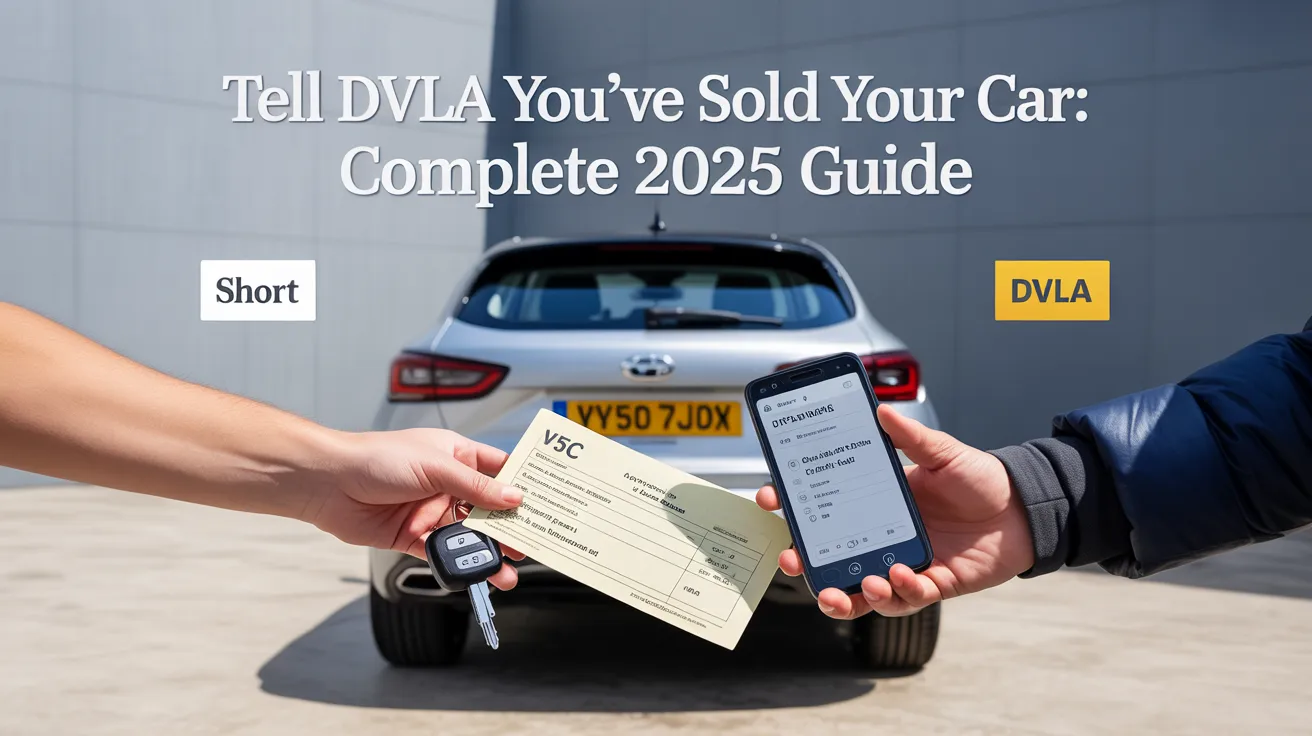

Selling your car? Don’t risk fines or legal trouble! Our full 2024 guide shows you how to tell DVLA you’ve sold your car fast and right. Whether you sell to a private buyer, a dealer, or face special cases, we help you with clear steps, expert tips, and all you need to know.
Start DVLA Notification Process
Why You Must Tell DVLA You’ve Sold Your Car
When you sell your car, telling DVLA is not just paper work. It’s your legal shield. Until DVLA knows you’re not the owner, you might have to pay for parking fines, speeding tickets, or even crashes with your old car.
The Legal Rules You Must Follow
UK law says you must tell DVLA at once when you sell your car. If you don’t, you could get fines up to £1,000. DVLA needs right records to keep roads safe and track all cars.
Key Legal Points:
- You must tell DVLA as soon as you sell your car
- The new owner can’t tax the car until you tell DVLA
- You are still the legal owner until DVLA updates their records
- Fines for late telling can reach £1,000
Money Risks of Not Telling DVLA
You could face big money problems too:
- Paying road tax for a car you don’t own
- Being liable for the new owner’s traffic fines
- Possible insurance issues
- Hard time selling cars in the future
- Credit score harm from unpaid fines
How Fast You Must Tell DVLA
The answer is simple: right away. As soon as the sale is done, you must tell DVLA. There is no grace time. Waiting puts you at risk.
Warning: Even a one-day delay could make you liable for any issues with your car.
Before You Start: Key Info and Papers
Before you can tell DVLA you’ve sold your car, you need to get some info and papers. Being ready makes the process smooth and error-free.
Papers You Must Have
Must-Have Items:
- V5C registration paper (log book)
- Car registration number
- 11-digit code from V5C/2 (yellow slip)
- Date of sale
- New owner’s full name and address
Good to Have:
- Proof of sale (receipt or deal)
- New owner’s phone number
- Car mileage at sale time
Info You Need About the Buyer
When you tell DVLA you’ve sold your car, you must give right details about the new owner:
Required Buyer Info:
- Full name (as on their driving license)
- Full address with postcode
- Date of sale (when you gave them the car)
Important Notes:
- Check all details twice
- Use the buyer’s legal name, not a nickname
- Give the full address, not just part of it
- Keep a copy of the buyer’s info for your files
What to Do If You’ve Lost Your V5C
Don’t worry if you can’t find your V5C log book. You can still tell DVLA you’ve sold your car, but you need to take extra steps:
Step 1: Get a New V5C
- Go to the DVLA website
- Fill in the V62 form
- Pay the £25 fee for a new one
- Wait for your new V5C (often in 5 days)
Step 2: Tell DVLA by Post If you can’t wait for the new V5C, write to DVLA with:
- Your name and address
- Car registration number
- Car make and model
- Exact date of sale
- New owner’s name and address
Send to: DVLA Swansea SA99 1BA
Pro Tip: Send this letter by recorded post so you have proof.
How to Tell DVLA You’ve Sold Your Car Online (Best Way)
The online way is the fastest, easiest, and most sure way to tell DVLA you’ve sold your car. Here’s how to do it:
Step 1: Go to the DVLA Online Service
- Go to the official DVLA car notification service
- Click the green “Start now” button
- The service works 7am to 7pm each day
What You Need:
- Internet link
- Email for proof
- 10-15 minutes to finish
Step 2: Enter Car Details
You need to give:
- Car registration number
- 11-digit code from V5C/2
- Say you are the current owner
Important: The code must be typed just as it is on your V5C.
Step 3: Give Buyer Info
Type the new owner’s details:
- Full name
- Full address
- Date of sale
Double-check: Make sure all info matches what’s on the sale paper.
Step 4: Check and Send
- Look at all info you typed
- Say you know you give up rights to the plate (if needed)
- Give your email for proof
- Send the notice
Success: You’ll get proof on screen and an email in minutes.
What Happens After You Send
Right Away:
- DVLA updates their records at once
- Car tax stops on its own
- You get a tax refund for full months left
Time Frame:
- In 24 hours: Email proof comes
- In 4 weeks: Proof letter comes by post
- In 6 weeks: Tax refund check comes
What You Should Do:
- Keep the email proof safe
- Destroy your V5C (new owner gets a new one)
- Stop your insurance once the transfer is done
- Keep a note of the sale details
Telling DVLA by Post: When and How
While the online way is best, you can also tell DVLA you’ve sold your car by post. Here’s when and how to use this way.
Which V5C Part to Fill In
It depends on who you sell to. You need to fill in different parts of your V5C:
Private Buyer:
- Fill in Section 6 (New Owner Details)
- Tear off and send to DVLA
- Give the new owner the green slip (V5C/2)
Motor Trader, Insurer, or Dismantler:
- Fill in Section 9 (yellow slip)
- Give the whole V5C to the trader
- The trader will tell DVLA for you
Business Sale:
- Fill in Section 6
- Add business name and main address
- Give more business papers if asked
Where to Send Your Notice
Send the filled part to:
DVLA Swansea SA99 1BA
Don’t forget to add:
- Filled V5C part
- Your contact info
- A note if you need proof
Proof of Post Tips
Always send by:
- Recorded post (£2.15)
- Special post (£6.85)
- Keep the track number safe
- Take a photo of the envelope before post
Why this matters:
- Proof you sent the notice
- Track shows when DVLA got it
- Safety against claims you didn’t tell them
Warning: Normal post gives no proof of delivery and is not a good idea.
Special Cases When Telling DVLA About Your Sold Car
Not all car sales are simple. Here’s how to handle special cases when you need to tell DVLA you’ve sold your car.
Selling to a Motor Trader vs Private Buyer
Motor Trader Sale:
- Fill in Section 9 (yellow slip) of V5C
- Give the whole V5C to the trader
- Trader tells DVLA for you
- You should still get proof
Private Buyer Sale:
- Fill in Section 6 of V5C
- Send Section 6 to DVLA
- Give green slip (V5C/2) to buyer
- You tell DVLA yourself
Key Differences:
| Aspect | Motor Trader | Private Buyer |
|---|---|---|
| Who tells DVLA | Trader | You |
| V5C part | Section 9 | Section 6 |
| Time | Often same day | In 24 hours |
| Proof | From trader | Direct from DVLA |
What to Do With Private Number Plates
If you have a private plate, you must choose to keep it or move it with the car.
Keeping Your Private Plate:
- Ask to keep the number BEFORE selling
- Use form V317 (on GOV.UK)
- Pay £80 to keep it
- DVLA gives new number for the car
- Sell the car with its new number
Moving Plate with Car:
- Add plate to sale deal
- Tell buyer about the move process
- Fill in V5C as normal
- No more steps needed
Important: You can’t keep a plate after selling the car. You must do this before the sale.
Selling a Car After Someone Dies
When selling a car for someone who has died, you need more papers:
Papers You Need:
- Death certificate
- Proof of will or letters of right
- Filled V5C with executor details
- Proof of who you are
Process:
- Fill in V5C as “Executor of [person’s name]”
- Add copy of death certificate and will proof
- Send to DVLA with sale notice
- Keep copies of all papers
Time: Plan for more time (up to 6 weeks) for these cases.
Business Car Sales
Selling a company car needs more steps:
Info You Need:
- Company number
- Business address
- Who can sign for the company
- Company paper if needed
Process:
- Fill in V5C with company info
- Add company number
- The right person must sign
- Keep business sale records
VAT Rules:
- If VAT registered, add VAT bill
- Keep records for 6 years
- Ask accountant if not sure
After Telling DVLA: What Comes Next
Once you’ve told DVLA you’ve sold your car, the job isn’t quite done. Here’s what happens next and what you need to do.
Car Tax Refund Process
Auto Refund:
- DVLA stops car tax on its own
- Refund based on full months left
- Check sent to owner’s address
Time Frame:
- Work time: 4-6 weeks
- Post time: 1-2 more weeks
- Total: Up to 8 weeks
What You Get:
- Refund for each full month left
- No refund for part months
- Check made out to the owner
Important: Make sure DVLA has your right address. Update it if you moved.
When to Stop Insurance
When to Stop:
- Wait until DVLA says the transfer is done
- Often safe after you get email proof
- Never stop before you tell DVLA
Process:
- Call your insurance firm
- Give sale date and DVLA proof
- Ask for refund for unused time
- Get written proof that insurance stopped
What You’ll Get:
- Refund for days not used
- Some firms charge fees to stop
- Refund often in 14 days
When You’ll Get Proof
Online Way:
- At once: Proof on screen
- In minutes: Email proof
- In 4 weeks: Proof letter by post
Post Way:
- In 4 weeks: Proof letter
- No email: Only post proof
What to Do With Proof:
- Keep email proof for good
- File post letter safe
- Use as proof if any issues come up
- Keep the code for future questions
What to Give the New Owner
Must-Have Papers:
- V5C/2 (green slip) – short proof of ownership
- MOT paper (if valid)
- Service history
- Car manual
- Both sets of keys
Other Items:
- Spare tyre and tools
- Alarm/immobiliser guide
- Any warranty papers
- Sale receipt
Important: Never give the buyer the full V5C. Only the green slip (V5C/2).
Fixing Common Issues When Telling DVLA
Even with good prep, issues can happen when you tell DVLA you’ve sold your car. Here’s how to fix common problems.
What If You Don’t Get Proof?
Online Way:
- Check spam/junk email folder
- Make sure email was typed right
- Wait 48 hours before you act
If Still No Proof:
- Call DVLA car help: 0300 790 6802
- Have your car number and code ready
- Ask them to send email proof again
- Write to them if needed
Post Way:
- Wait 6 weeks for them to process
- Call DVLA if no answer
- Think about sending again by recorded post
Buyer Issues and How to Handle Them
Common Issues:
- Buyer says they didn’t get V5C/2
- Fight over sale date
- Buyer fails to register the car
- Car problems after sale
How to Respond:
- Look at your sale deal/receipt
- Give proof you told DVLA
- Keep all talks in writing
- Call DVLA if buyer doesn’t register
Legal Safety:
- Keep good records of the sale
- Use a written sale deal
- Take photos of the car and papers
- Think about having a witness for private sales
Fixing Errors in Your Notice
Common Errors:
- Wrong buyer address
- Wrong sale date
- Typo in car number
- Wrong document code
How to Fix:
- Call DVLA at once: 0300 790 6802
- Explain the error clearly
- Give the right info
- Write to them to confirm
Tips to Avoid Errors:
- Check all info twice before sending
- Keep a copy of what you send
- Take a photo of online proof
- Keep buyer details for your files
Common Questions About Telling DVLA You’ve Sold Your Car
When should I tell DVLA about selling my car?
You should tell DVLA you’ve sold your car right after the sale is done. There is no grace time. Waiting could make you liable for fines or issues with the car. DVLA needs fast notice to update their records and move duty to the new owner.
What info do I need to give DVLA when I report my car sale?
To tell DVLA you’ve sold your car, you’ll need:
- Car registration number
- 11-digit code from V5C/2
- Date of sale
- New owner’s full name and address
- Your email (for online notice)
Check all details twice before you send.
What papers should I keep as proof I sold my car?
Keep these papers as proof:
- Email from DVLA (online way)
- Post proof letter (both ways)
- Recorded post receipt (post way)
- Copy of the sale deal or receipt
- V5C/2 slip copy (for your files)
These papers prove you did your legal duty to tell DVLA you’ve sold your car.
Can I tell DVLA about a car sale for someone else?
Yes, you can tell DVLA you’ve sold a car for someone else if you have:
- Power of attorney
- Executor status (for someone who died)
- Written OK from the owner
- Business OK (for company cars)
You’ll need to show proof of your right to act plus the standard notice details.
Will DVLA send proof after I tell them I sold my car?
Yes, DVLA will send proof:
- Online way: Email proof at once + post letter in 4 weeks
- Post way: Proof letter in 4-6 weeks
Keep this proof safe to show you told DVLA you’ve sold your car.
What happens if I don’t tell DVLA I sold my car?
If you don’t tell DVLA you’ve sold your car:
- You still pay road tax
- You might get fines for the new owner’s traffic issues
- You might be held at fault for accidents
- You could get a fine up to £1,000
- Your insurance might not work
Always tell DVLA at once after you sell your car.
How long does DVLA take to process my car sale notice?
Process times vary:
- Online notice: Done at once
- Post notice: 4-6 weeks to process
- Proof letter: 4-6 weeks to arrive
- Tax refund: Up to 8 weeks total
Online notice is fastest and best when you tell DVLA you’ve sold your car.
Can I tell DVLA I sold my car if I lost the V5C?
Yes, you can still tell DVLA you’ve sold your car without the V5C:
- Ask for a new V5C (£25 fee)
- Or write to DVLA with car and buyer info
- Add proof of who you are and that you own the car
- Send by recorded post for proof
The process takes longer but still works.
What’s the difference between telling DVLA online vs by post?
Online way:
- Done at once
- Email proof
- Faster tax refund
- More sure
- Works 7am-7pm
Post way:
- 4-6 week process
- Only post proof
- Slower refund
- Risk of post delays
- No time limits
Online is best when you tell DVLA you’ve sold your car.
Do I need to tell my insurance firm when I sell my car?
Yes, you must tell your insurance firm:
- Call them after DVLA gives proof
- Give sale date and DVLA code
- Ask to stop and get refund
- Get written proof that insurance stopped
Never stop insurance before you tell DVLA you’ve sold your car.
What happens to my road tax when I tell DVLA I sold my car?
When you tell DVLA you’ve sold your car:
- Road tax stops on its own
- You get refund for full months left
- Check sent to owner’s address
- New owner must tax car before driving
- Refund takes 4-8 weeks to process
No need to do more than tell DVLA about the sale.
Can I tell DVLA I sold my car if the buyer is from abroad?
Yes, but you need extra steps:
- Give buyer’s address from another country
- Add copy of their passport/ID
- Note the car will be sent abroad
- Buyer may need export papers
- Process may take longer to check
Always get full buyer details when you tell DVLA about sales to other countries.
What should I do if the new owner doesn’t get their V5C?
If the buyer doesn’t get their V5C:
- Make sure you told DVLA right
- Give buyer your proof code
- Buyer should call DVLA: 0300 790 6802
- Buyer might need to ask for a new one
- Keep records of your notice
This is why it’s key to tell DVLA right when you sell your car.
How do I tell DVLA I sold my car to a motor trader?
To tell DVLA you sold to a motor trader:
- Fill in Section 9 (yellow slip) of V5C
- Give the whole V5C to the trader
- Trader tells DVLA for you
- Get receipt from trader
- Follow up if no proof comes
The process is different when you tell DVLA about trader sales.
Can I get fined for not telling DVLA I sold my car?
Yes, fines include:
- Fine up to £1,000 for late notice
- Liable for new owner’s traffic fines
- Keep paying road tax
- Possible insurance issues
- Hard to sell cars in future
Always tell DVLA at once to avoid fines when you sell your car.
How do I fix errors after I told DVLA I sold my car?
To fix errors:
- Call DVLA at once: 0300 790 6802
- Explain the error clearly
- Give the right info
- Write to them to confirm
- Keep records of all fixes
Fast action is key when fixing info after you tell DVLA about a sale.
Why Trust Our DVLA Notice Guide
Official DVLA Info We Use
This guide uses the latest official DVLA info and steps:
We update this guide often to make sure it’s right with current DVLA steps.
Our Skill in Car Papers
With over 15 years of skill in car papers and sign-up services, we’ve helped thousands of customers tell DVLA about car sales. Our team has:
- Past DVLA staff
- Car sign-up experts
- Legal rule experts
- Customer service pros
Our Promise:
- New, right info
- Clear, step-by-step help
- Help for special cases
- Promise to help customers succeed
What Our Customers Say
“This guide made telling DVLA I’d sold my car so easy. The step-by-step steps were clear and I got my proof in hours.” – Sarah T., Manchester
“I was worried about the process, but this guide covered all. Even the FAQ part gave answers to questions I hadn’t thought of.” – James R., Birmingham
“Sold my car to a trader and wasn’t sure what to do. This guide told me the difference and helped me avoid possible fines.” – Emma L., Leeds
Ready to Tell DVLA About Your Sold Car?
Now that you have all the info you need, it’s time to tell DVLA you’ve sold your car. Follow our step-by-step guide and you’ll have peace of mind knowing you’ve done your legal duty.
Get Started Now
Start DVLA Notification Process